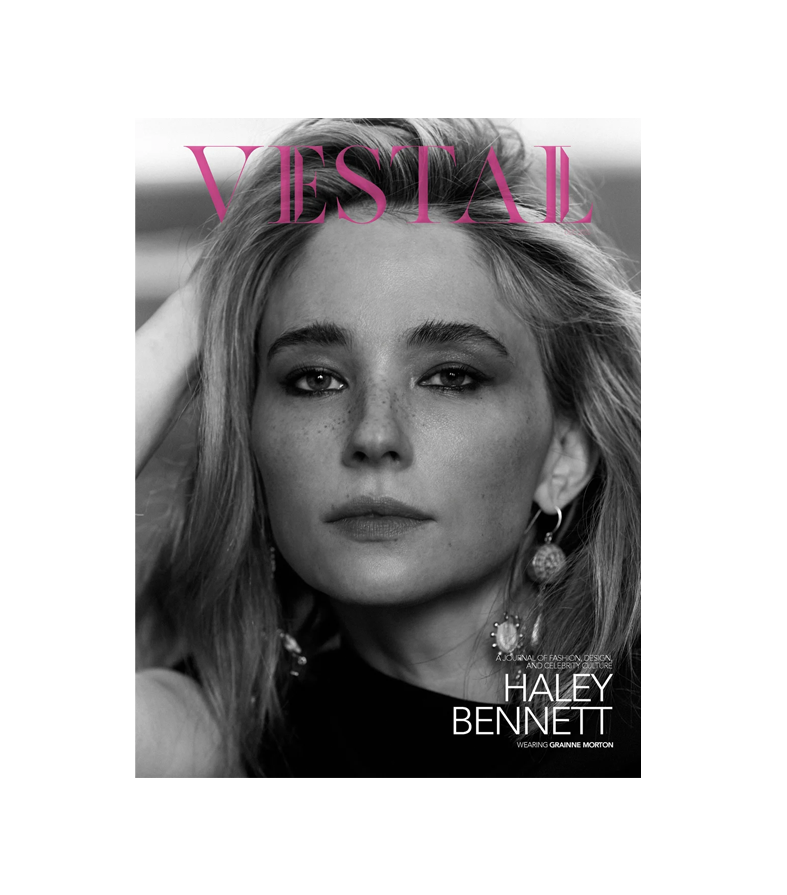
DECEMBER 12, 2025
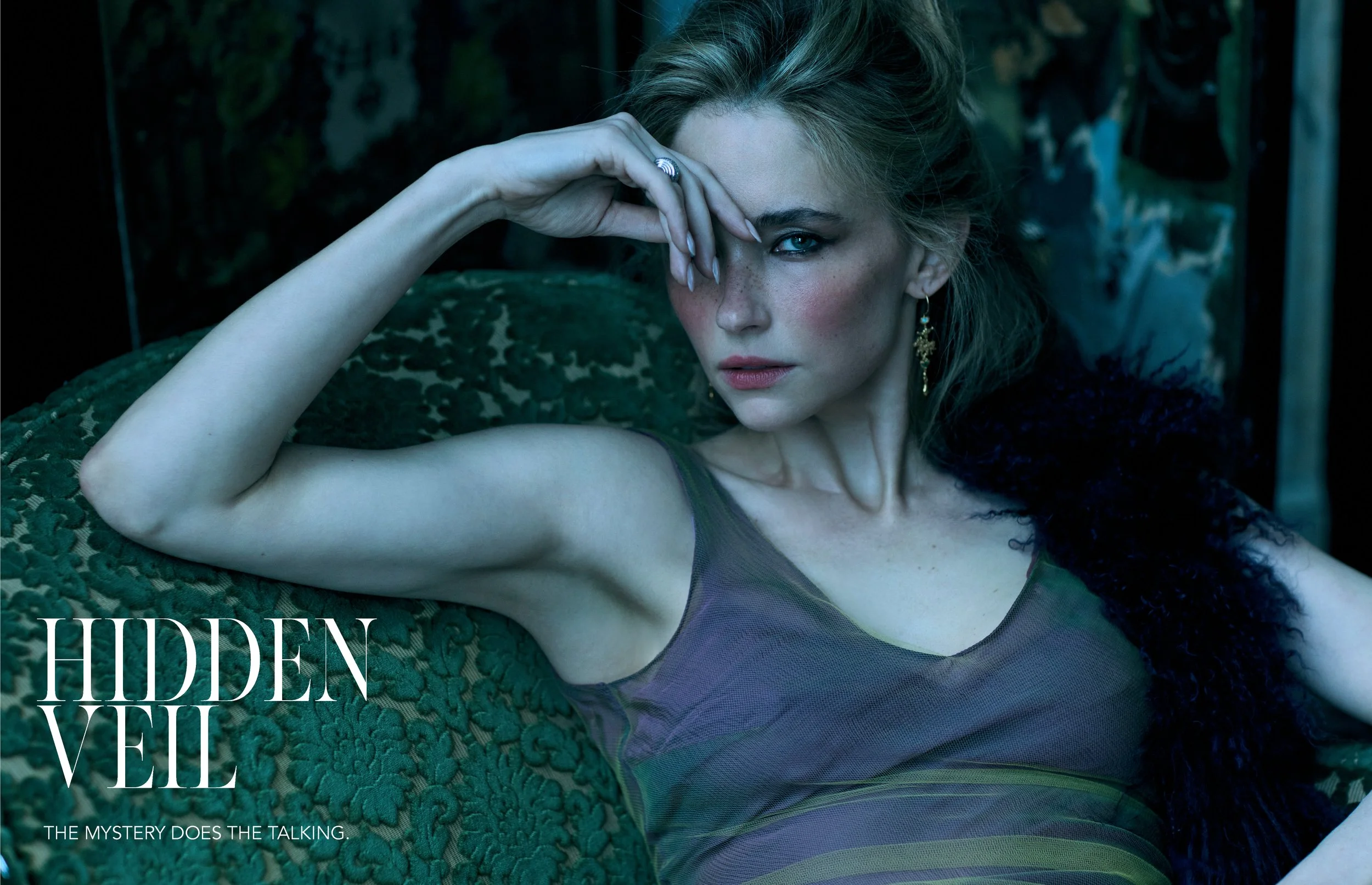
PHOTOGRAPHY LEE MALONE, STYLING CHER COULTER, INTERVIEW DAVID GARGIULO
Dress VIKTOR GICHEV, bra ERES, earrings RUBY JACK, ring BEAR BROOKSBANK.
“YOU HAVE TO HONOR THE DARKNESS IN YOU, AND YOU HAVE TO HONOR THE LIGHT.
NEITHER EXISTS WITHOUT THE OTHER.”
— HALEY BENNETT
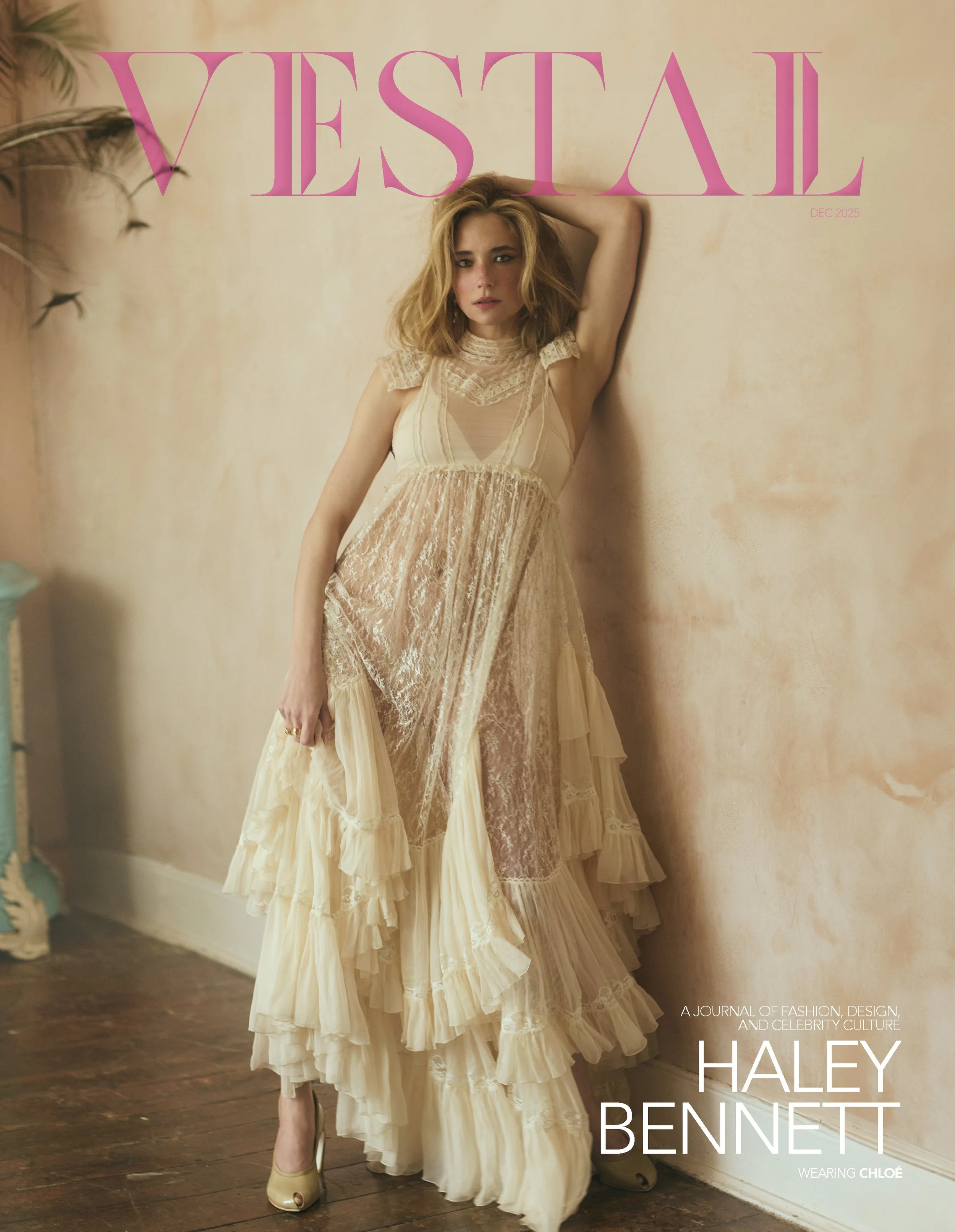
WEARING CHLOÉ
INTERVIEW WITH HALEY BENNETT
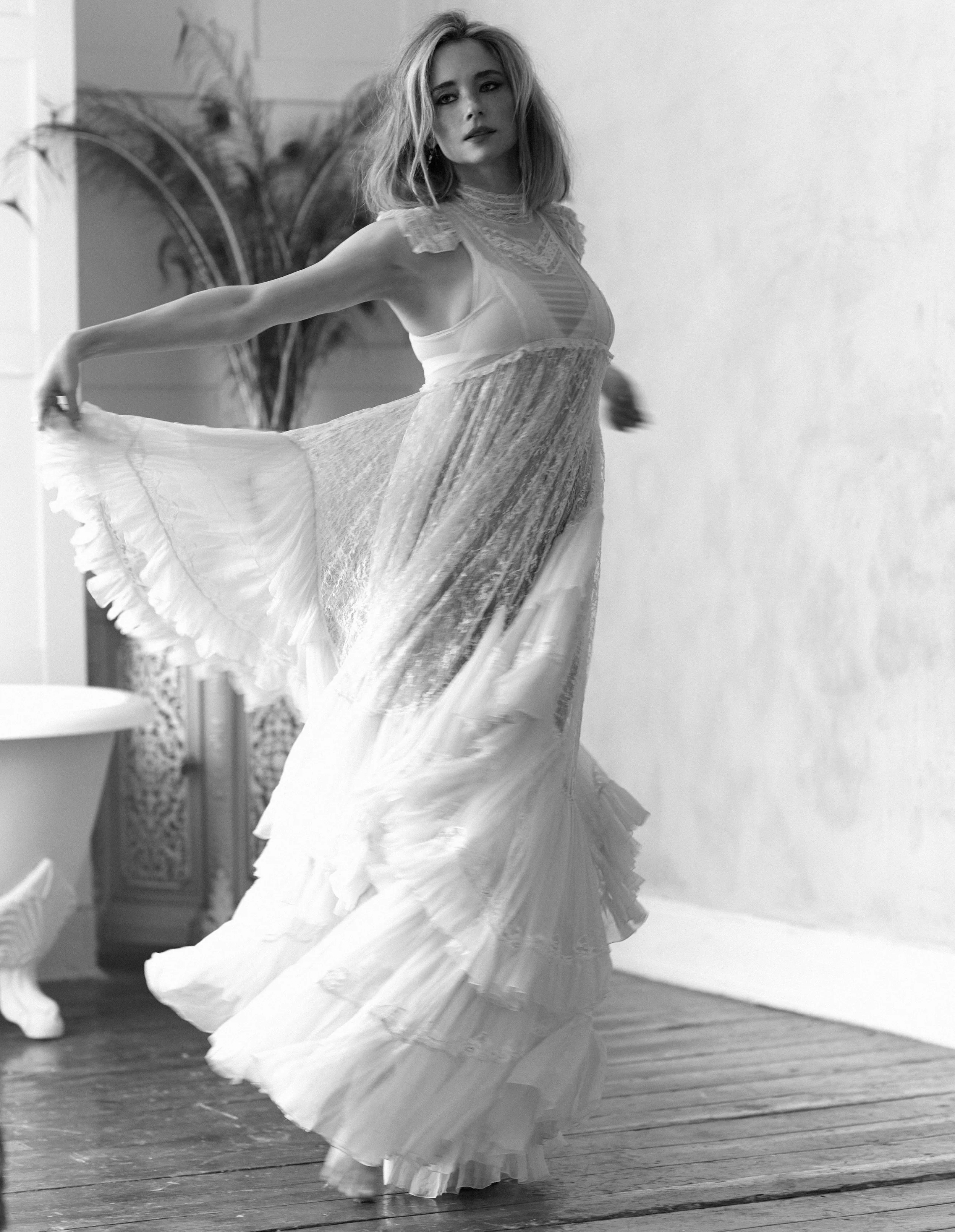
Dress CHLOÉ, earrings GRAINNE MORTON, rings BEAR BROOKSBANK.
Haley Bennett is not just an actress; she is a thinker, an observer, and a storyteller. Her career has always been guided by curiosity, empathy, and a relentless pursuit of truth not only within her characters, but in life itself.
From the psychological intensity of Swallow, where she portrayed a woman grappling with anxiety and compulsive behavior, to the layered emotional complexity of The Girl on the Train, Haley has consistently gravitated toward characters who exist in the gray areas of the human experience. Her roles confront trauma, impossible choices, and the search for connection in a fractured world, revealing her enduring fascination with imperfection, emotional honesty, and the power of storytelling. Her creative mind draws inspiration from every corner: the expressive, boundary-pushing choreography of Pina Bausch, the timeless poetry of Walt Whitman, William Blake, and John Keats, and the layered complexity of cinema. For Haley, art is a mirror: it exposes our contradictions, our fragility, and our capacity for love. She is drawn to the delicate balance between light and shadow, order and chaos, believing that embracing imperfection is not just an artistic choice, but a path to deeper understanding of ourselves and others.
In her latest project, Apple TV’s The Last Frontier, Haley inhabits Sydney, a character navigating moral ambiguity, isolation, and the fragile bonds of trust. Sydney’s fractured inner world mirrors the austere landscape of Alaska. Through her performance, Haley displays the human need to connect in extreme circumstances, revealing layers of guilt, resilience, and humanity while grappling with the challenges of the unforgiving environment. Yet even in this complexity, Haley’s outlook is fundamentally hopeful. She believes in the universal truths that unite us, the resilience of the human spirit, and the power of shared experiences, whether through film, television, or simple human communion. In this conversation, she shares the insights that shape both her art and her life, offering a rare glimpse into the mind of a performer who seeks not only to portray humanity, but to understand it. Prepare to see the world through the eyes of Haley Bennett, where the imperfect is alive, the human heart is resilient, and connection is everything.
Haley Bennett __ Let me start by saying I loved doing this shoot. It reminded me of an incredible show in Paris, Vollmond, by the incredible choreographer Pina Bausch. It was magnificent. The expressiveness of dance, the way you can convey feeling without a single word, just with the body. It stayed with me. I wanted to bring some of that into this shoot. That sense of boundless imagination, of physical storytelling. Pina Bausch was such a pioneer, and her passion for dance just leapt off the screen. Seeing the photos now, I feel that same rawness; something vulnerable, primal, pure expression.
David Gargiulo __ I love that so much thought went into this photoshoot. Who are you? [emphatically]
HB __ Just a woman from Ohio, who lived an incredibly nomadic life. I think I’m such a mix of contradictions. And contradiction creates drama: two opposing forces coming together to make something interesting. I’ve had so many different existences: mother, independent woman, artist. I feel like I have a large well to draw from.
DG __ Two minutes and I love you already [laughs]. Let’s keep this going. Your tagline for Instagram starts off with: “Everything is more beautiful because we’re doomed.” It made me think of the idea that pain and loss can sometimes make us see what’s truly important. Is that what you meant?
HB __ For me, it’s about the cost of life and that cost is death. We live and then we die, and because there’s an end, what we do with our days matters. Every day could be our last, and it’s important to recognize that and see the beauty in the minute. One of my favorite poems is Walt Whitman’s Song of Myself. “The east and the west are mine. The north and the south are mine.” A reminder of the boundless possibilities of life and the importance of embracing every moment even knowing it will end. And then there’s William Blake: “to see a world in a grain of sand and heaven in a wildflower, hold infinity in the palm of your hand and eternity in an hour.” I love how he reminds us to see the beauty and vastness in even the smallest moment. Recently, I came across another piece from Keats about a Grecian urn. It’s essentially about a life unlived. There’s this beautiful bride painted on the urn, trapped in perfection. She’s never experienced the damage that comes with living. Keats tries to answer if we live to become broken. And he’s faced with this perfect woman who will never feel pain. It raises the question: what’s better, to be perfect or to be broken, messy, imperfect, but alive? I think it’s the latter.
DG __ I feel like everyone would say alive, no?
HB __ Are you sure? Perhaps but not the woman on the urn. She is just depicted that way, perfect, and trapped in that perfection and doesn’t get to decide. Someone might look at her and idealize that perfection. And that says so much about our culture. People chase perfection constantly. They want to be the urn.
DG __ That’s a good point. I think I used to be that way when I was younger too. Nowadays, I’ve learned that embracing your imperfections is actually where you find peace and happiness.
“EVERY CHARACTER IN THE LAST FRONTIER IS CARRYING SECRETS, AND THAT MAKES TRUST ALMOST IMPOSSIBLE, BECAUSE TRUST FORCES YOU TO SEE YOURSELF HONESTLY.”
— HALEY BENNETT ON THE LAST FRONTIER
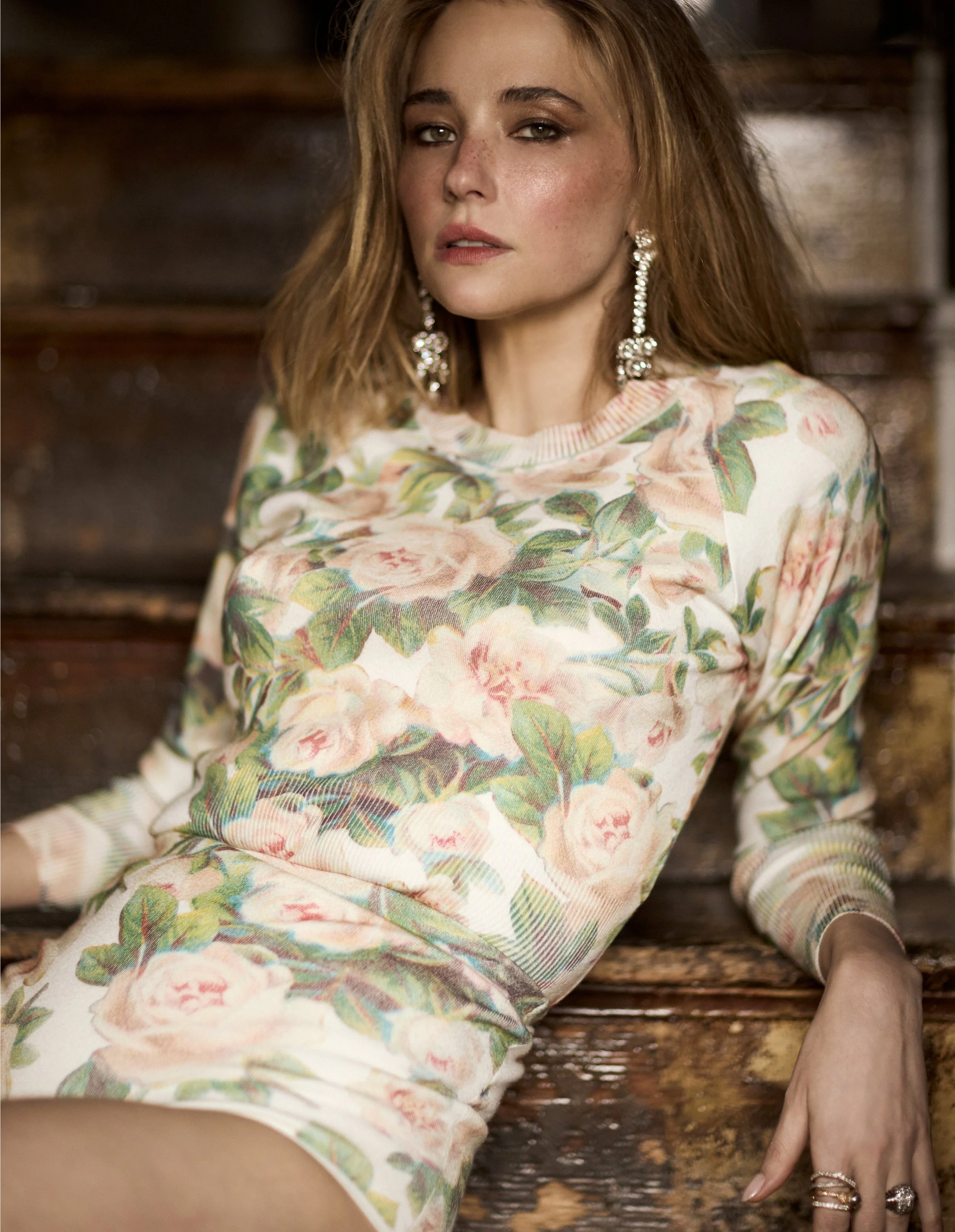
Total look SIMONE ROCHA, earrings ALESSANDRA RICH, rings BEAR BROOKSBANK.
HB __ Exactly. You have to accept them. Embrace the flaws instead of obsessing over them. Obsession is such a waste of time, and time is all we have. It’s precious.
DG __ And often there isn’t a perfect solution. It’s about finding the best imperfect solution. It’s about balance.
HB __ Yes! The word of the day for me is balance. You have to honor the darkness in you, and you have to honor the light. Neither exists without the other. Embrace the shadow because it’s going to surface either way. If you don’t acknowledge it, it comes out in destructive ways.
DG __ Is this what is happening with Sidney in your new show The Last Frontier?
HB __ Yes. The Last Frontier is entertainment but that doesn’t mean we can’t find meaning in it. I was able to work with Jason [Clarke] and Dominic [Cooper] to find moments of truth and drama, to breathe life into these larger-than-life characters. Sydney goes on such a journey. What you see isn’t what you get. Her layers are gradually peeled back, and her truth is revealed over the course of the ten episodes. The show, for me, is about corrupt systems and power structures versus community and the individual. I think people have lost touch with the idea of holding each other up, helping each other, defending one another. We’ve become very self-protective, focused only on our own worlds, our own families, and in doing so, we’ve become blinded to the truth: nobody is truly safe. Of course, the show is entertainment, but it’s interesting to pull back and ask: what really matters? That’s represented by Frank Remnick, played by Jason Clarke. Sydney comes in seeming very self-focused, concerned with the CIA and the powers orchestrating everything behind the scenes. Then she meets Frank, and through the choices she’s had to make, and the messes she creates and has to clean up, she begins to realize that she and Frank aren’t so different. Over the course of the season, you see these characters’ choices, why they made them, how they deal with the consequences, and how their actions impact not just their community but the world at large.
DG __ You introduced many interesting topics. Since you mentioned community, I find it interesting to look at the contrast we’re living in now, especially in the U.S. In our big cities, which are densely populated, there’s actually a growing sense of loneliness. It feels like we’re experiencing isolation on a scale that’s never seen before in human history. Depression tied to isolation is higher than ever, even though we have more tools than ever meant to connect us: social media, constant communication, access to the entire world. Somehow those connections have made us feel less connected. I wonder what you think about that.
HB __ I agree. There is a deep sense of isolation. And the internet, social media, dating apps, all of it is interesting because you can almost trace it back to something ancient, like in the Bible. You can ask: Is knowledge power? Or is it our demise? Should we take a bite of the apple? Is all of this a kind of death sentence for humanity? Because the more we know, the more we fight. We disagree on everything. There’s so much false information being pumped into our phones constantly: propaganda, noise, confusion, and it shuts us down. It's like a flood. And like anything that floods you, it’s traumatizing. I think there’s there’s a deep, collective trauma in the world right now that comes from being overwhelmed by information we’re not meant to hold all at once.
DG __ You nailed it. We live in what I call an attention economy, a constant bombardment. Our brains just weren’t meant for it.
HB __ Exactly! It’s like an addiction. Simple relationships lose their meaning because we can’t hold a conversation; we’d rather be on our phones, getting flooded with information. Otherwise, our nervous systems don’t feel regulated. It’s like we’re constantly pulled back to these devices that consume our attention, instead of having simple, direct, honest interactions. That’s why superhero movies are so popular. They’re a flood of information, fast and easy, and people get addicted to that rhythm. Then you show someone something thoughtful like a Barrie Kosky’s production, and they struggle to focus. It’s not just young people, even adults have a hard time engaging with films that aren’t cut in rapid bursts. Everything is quick.
DG __ Nobody wants to commit to something long-term anymore. Everything has to happen instantly but that’s not reality. Rome wasn’t built in a day, it was built brick by brick.
HB __ This is a crisis for artists. We’ve all been desensitized. Nobody wants to feel anything anymore.
DG __ Art used to be about what it conveyed. But now, because people can’t feel as deeply, it’s often more about marketing than talent.
HB __ Yes! Everything’s been commodified: people, actors, art itself. But I want to make beautiful films. I produced Widow Clicquot and Swallow exactly for this reason. And I intend to keep creating work that makes people feel something, that has a message, not just instant gratification. I feel the same about my new upcoming film, Synthetic. It’s entertaining but also meaningful, full of heart and humanity. It’s about what it means to be human or sentient in a world that constantly tells us who to love, what to love, how we should look, what we should read. We’re so flooded with external influences that people barely listen to their own intuition anymore.
DG __ So that’s the reason some people decide to live in isolation, right? To reconnect with their roots. In The Last Frontier, the community is in Fairbank, Alaska.
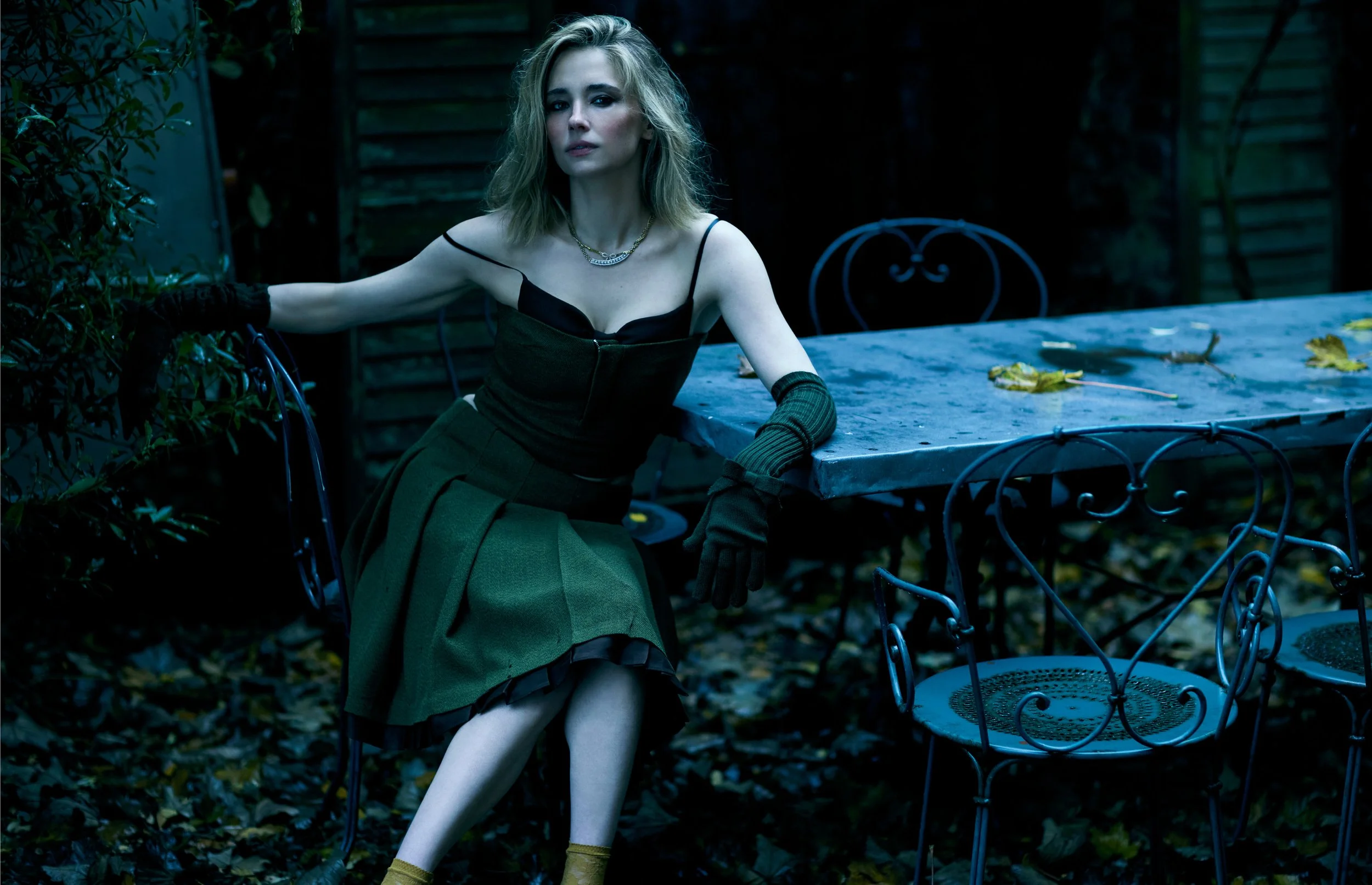
Total look SHUSHU TONG, necklace BEAR BROOKSBANK.
HB __ I’d say so. Frank, who’s from Chicago, had nothing good happen to him in the city. He carries trauma from his urban experiences. He moved to Alaska to escape all of that, to listen to his own needs and live in a place where people genuinely look after each other. And to them outsiders like Sidney and the convicts are dangerous. It’s their version of a zombie apocalypse when they show up [laughs].
DG __ It reminds me of some Native communities in the U.S., who made similar choices.
HB __ Yes. They live there to protect their history and sense of community. Which reminds me, I was amazed when I was in the Maasai Mara in Kenya, and saw communities that have existed for thousands of years. They’re dying off, and it’s tragic. You want to preserve that. For Sydney, it’s similar: she’s trying to protect legacy, honor, and integrity, even if her choices are morally gray.
DG __ Gray is good, life isn’t black or white but has many shades of gray.
HB __ Exactly. We need more gray. I want to make films full of gray.
DG __ Another theme in the show is trust and its fragility.
HB __ How can you trust in a world full of lies? Sydney and Frank both have to prove they’re worthy of trust, and there’s a high risk that taking chances on each other could destroy them. It’s a paradox: holding out one hand for truth while clutching a handful of lies in the other. Life is like that too. We all lie, we all get hurt, and we all make mistakes. You have to place your bets: is this person going to love me or destroy me?
DG __ In a way, trust acts like a mirror. Frank and Sidney see reflections of themselves in each other. Since each of them has secrets, they project their own untrustworthiness onto others. Frank himself isn’t this perfect hero. We discover that he has secrets too.
HB __ Exactly. It’s a contradiction. And Sydney has her own gray areas too. It’s the paradox of the Great Urn we were talking about before. Either you sacrifice living in a fake world where everything is perfect, or you accept that life is gray. People have to make tough choices all the time, and we may not understand why someone does something. Jason also says it in the show: “I don’t agree with what you’ve done, but I don’t judge you for it.” That’s liberating because we’ve all messed up. We’ve hurt others and we’ve been hurt. To be seen and understood despite our flaws, to have someone acknowledge your choices even if they don’t agree with them. One of my favorite movies, The Shape of Water, captures that really well when Sally says “He sees me for what I am, as I am. And he’s happy to see me. Every time. Every day.” That's incredibly freeing. There’s human truth there. And that’s ultimately what’s so interesting to me.
DG __ Another interesting theme is control. Sidney wants to control everything. Same with your character, Hunter, in Swallow. Extreme environments force you to cede control. How did you help your character through that evolution?
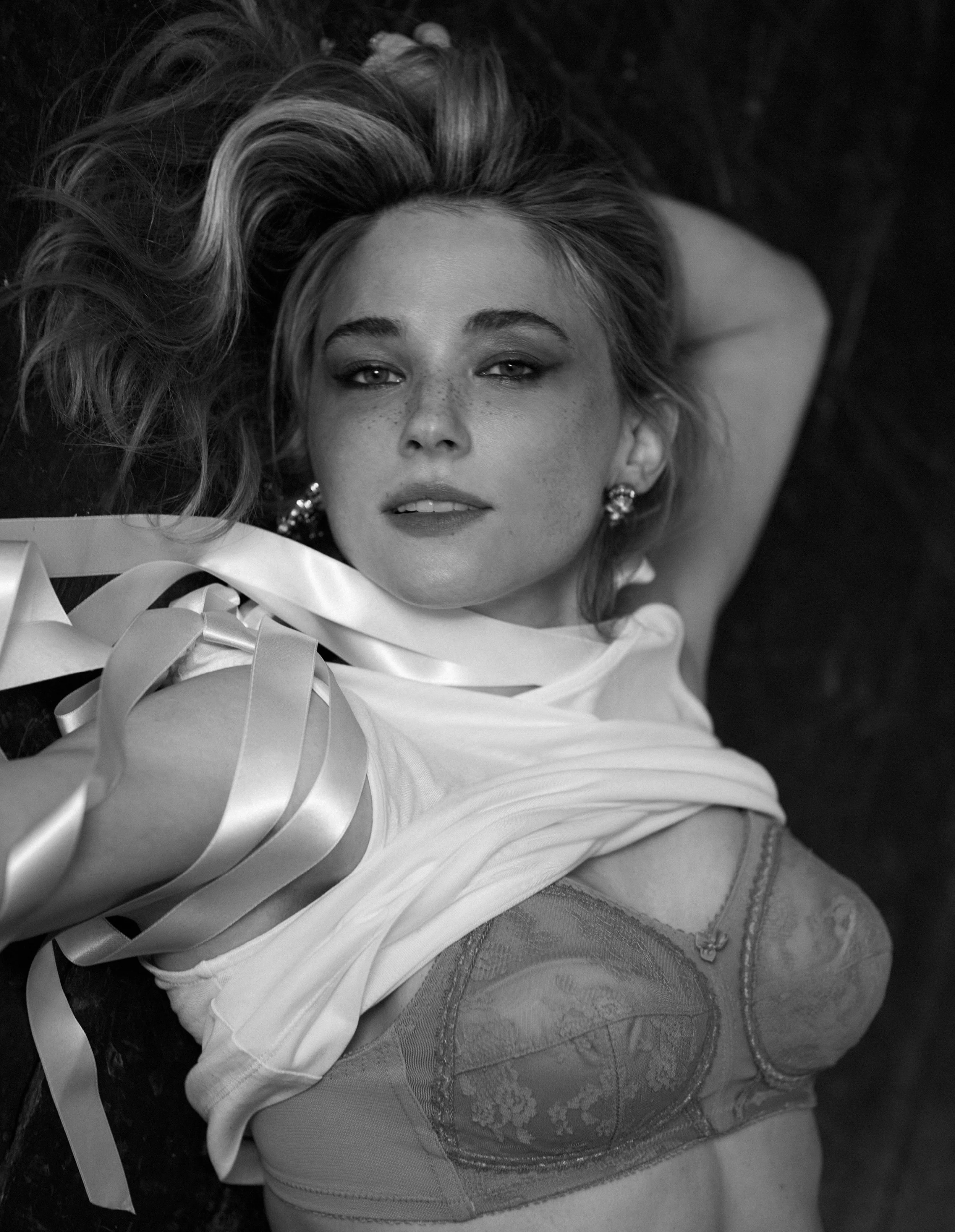
vest SIMONE ROCHA, bra TRIUMPH, earrings ALESSANDRA RICH.
HB __ It’s about creating and protecting the perfect veneer. With Sydney, when she shows up in Alaska, she’s wearing this armor. She’s impenetrable. But underneath there’s corruption and guilt. She’s really trying to hold it together. I love her private moments that you see over the seasons. Because of the flashbacks, you understand something is brewing beneath the surface but you don’t quite know what it is. It’s like in Swallow, when Hunter starts swallowing marbles and you’re like, “Whoa, what’s really going on here!?” I love this kind of light and darkness, perfection and imperfection. This imbalance. In my life, I’m seeking balance but I like playing characters that are incredibly imbalanced, and then exploring what creates that imbalance. What’s lurking beneath the surface? I love characters like Julianne Moore in Todd Haynes’ Safe and Nicole Kidman in Baby Girl, these characters with thin skin, where you feel like their skin could melt off at any moment and reveal something completely different, wild, insane.
DG __ You mentioned something I found really interesting in your answer. I have to say, you actors are lucky in this way: many people, when they really hit rock bottom, that’s the moment they get to transform. It's a very painful experience people have to go through to reach that transformation. And for regular people, it likely may happen a couple of times in a lifetime. You, as actors, get to do that through your characters many times.
HB __ Yeah, practice having nervous breakdowns. [laughs] It’s like burning things in your work. You get to live out chaos so that your real life can be more balanced and normal. I enjoy getting close to the flame in my work. The closer to the flame I can get, the more I can feel and create. I like to play with fire.
DG __ So speaking of that, every character, when they play with fire or go to the deep end, they tend to find something to hold onto. What do you hold on to, Haley?
HB __ The love for my daughter, Virginia. Secondly, my truth and the fact that truth changes as you grow. Truth is really important, especially as an actor, where there are so many different avenues and so many “truths.” You have to check in with yourself and ask, “What are my core values? What’s important to me?” For me, love and staying connected to my truth are everything.
DG __ What’s something you’ve learned recently that makes you feel optimistic about people?
HB __ Our similarities are way more than our differences. I was recently at a gathering in a room full of strangers and the topic of trauma came up. I shared a story and multiple people started crying and laughing, saying, “Me too. Me too.” It was so simple but so revealing. You have to be willing to open up, to share, to be honest, and then other people will do the same. It’s a give and take, a kind of human communion, and that’s what I love about films. We make films, we watch them, and we have experiences that we share. It’s cathartic. Even with television, like the great shows Apple TV is making, most people watch them at home, but we still crave shared experiences. Seeing something in a character that resonates with you makes you feel less alone. At the end of the day, we’re all looking for love and connection. We just have to keep believing in connection and in each other. That's what’s great about cinema, it brings people together, and I want to be a part of that.
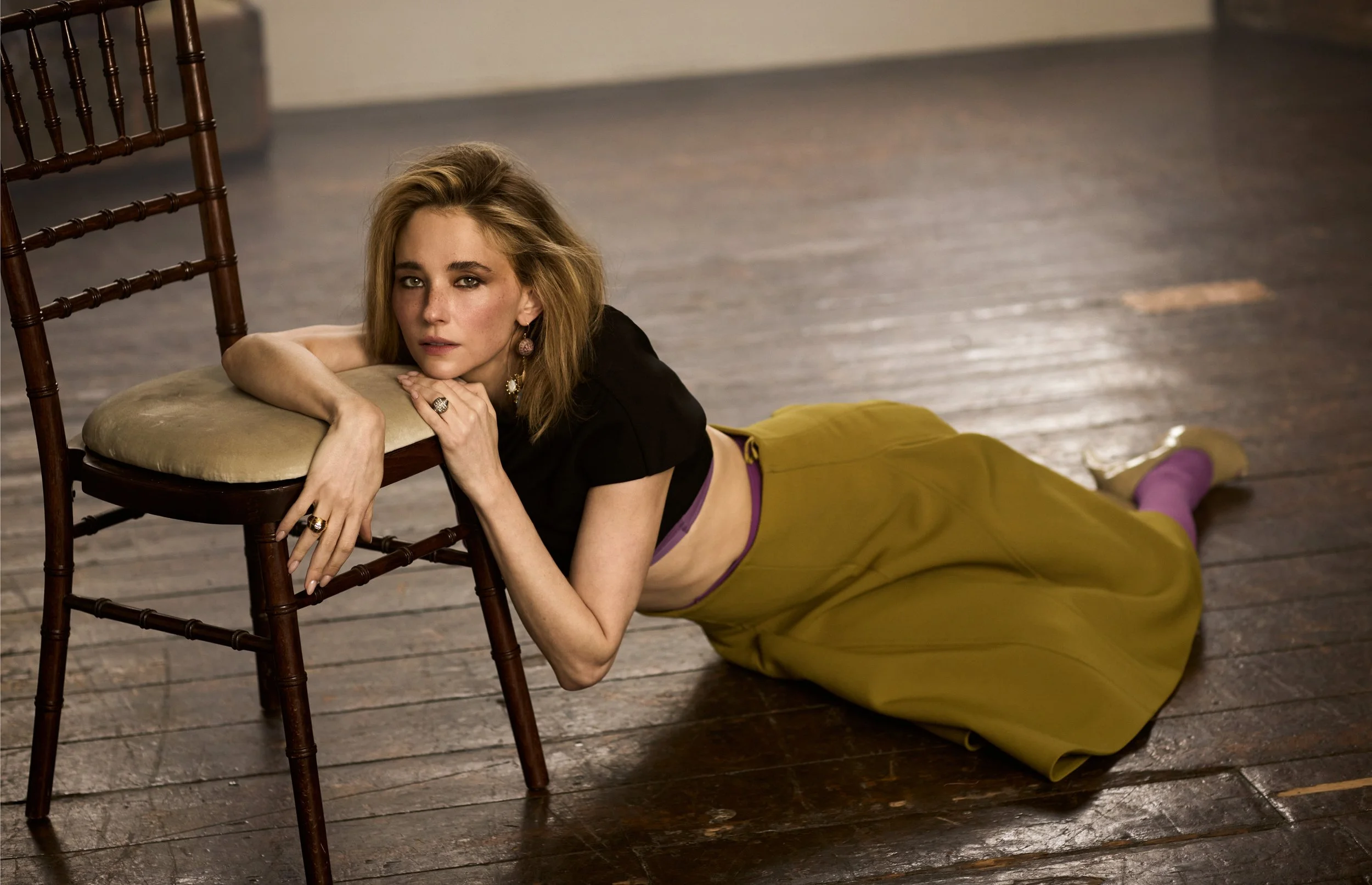
Total look EMILIA WICKSTEAD, earrings GRAINNE MORTON, rings BEAR BROOKSBANK, shoes TORY BURCH.
“THERE’S A DEEP, COLLECTIVE TRAUMA IN THE WORLD RIGHT NOW THAT COMES FROM BEING OVERWHELMED BY INFORMATION WE’RE NOT MEANT TO HOLD ALL AT ONCE.”
— HALEY BENNETT ON THE LAST FRONTIER
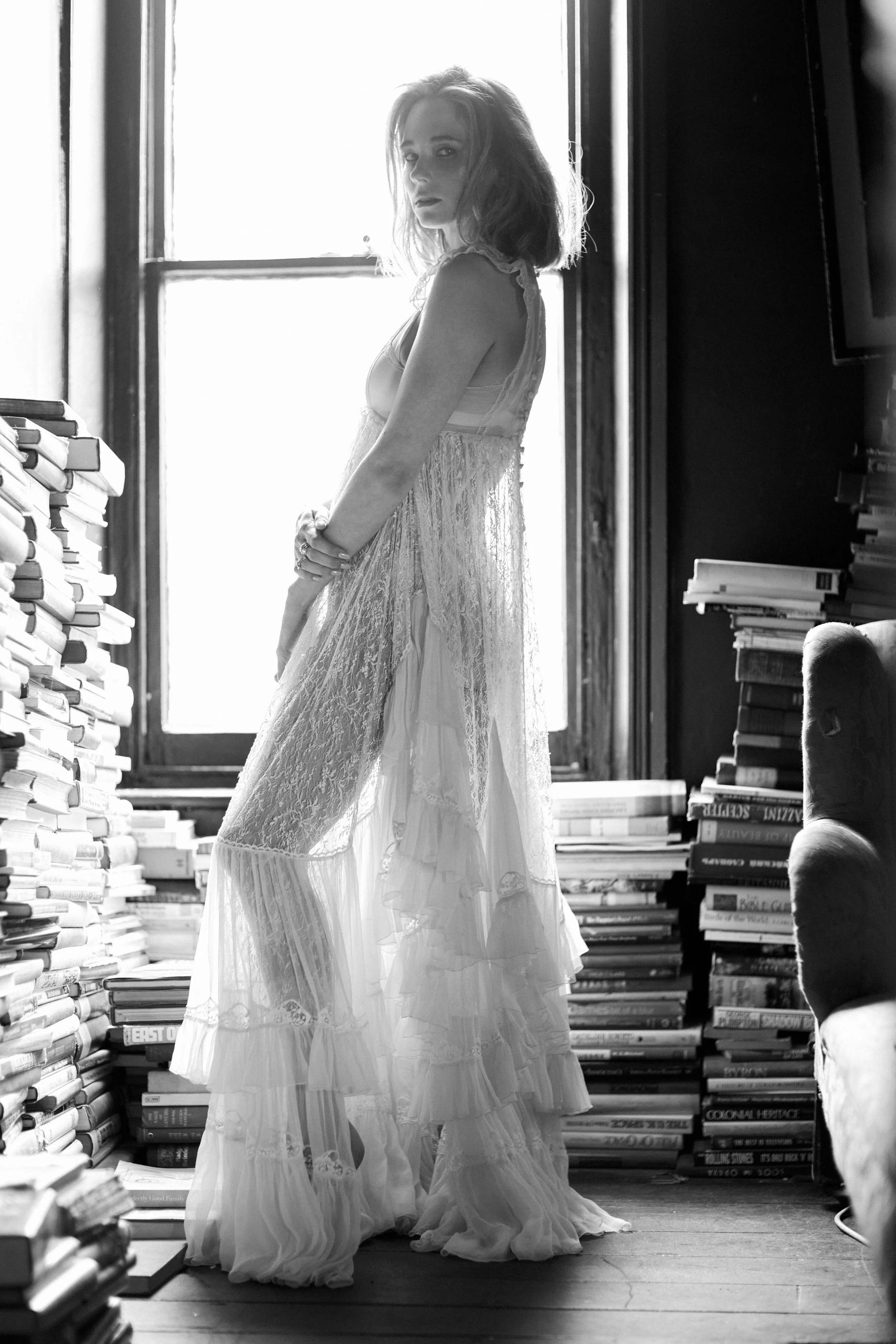
Dress CHLOÉ, earrings GRAINNE MORTON, rings BEAR BROOKSBANK.
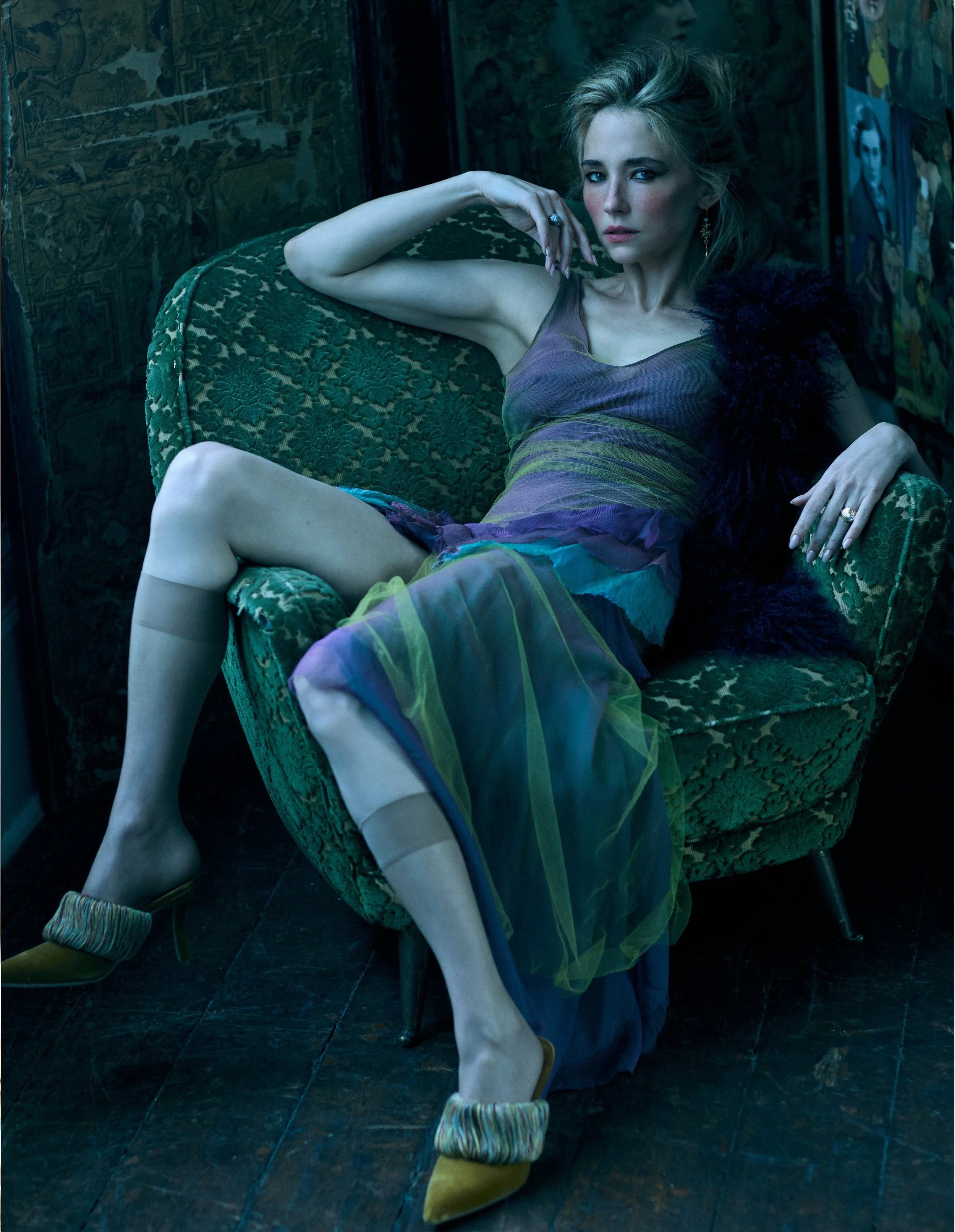
Dress VIKTOR GICHEV, bra ERES, earrings RUBY JACK, rings BEAR BROOKSBANK, shoes MANOLO BLAHNIK.
Photography Lee Malone, Styling Cher Coulter (A-Frame Agency), Interview David Gargiulo, Hair Kieron Fowles (Forward Artists), Makeup Florrie White (The Wall Group), Photo Assistant Kai Jadwat, Stylist Assistant Thomas Ramshaw, Talent Haley Bennett (Shelter PR)
STREAMING